

- October 28, 2026
- by Michael Caine
- 0
- 1:53 pm
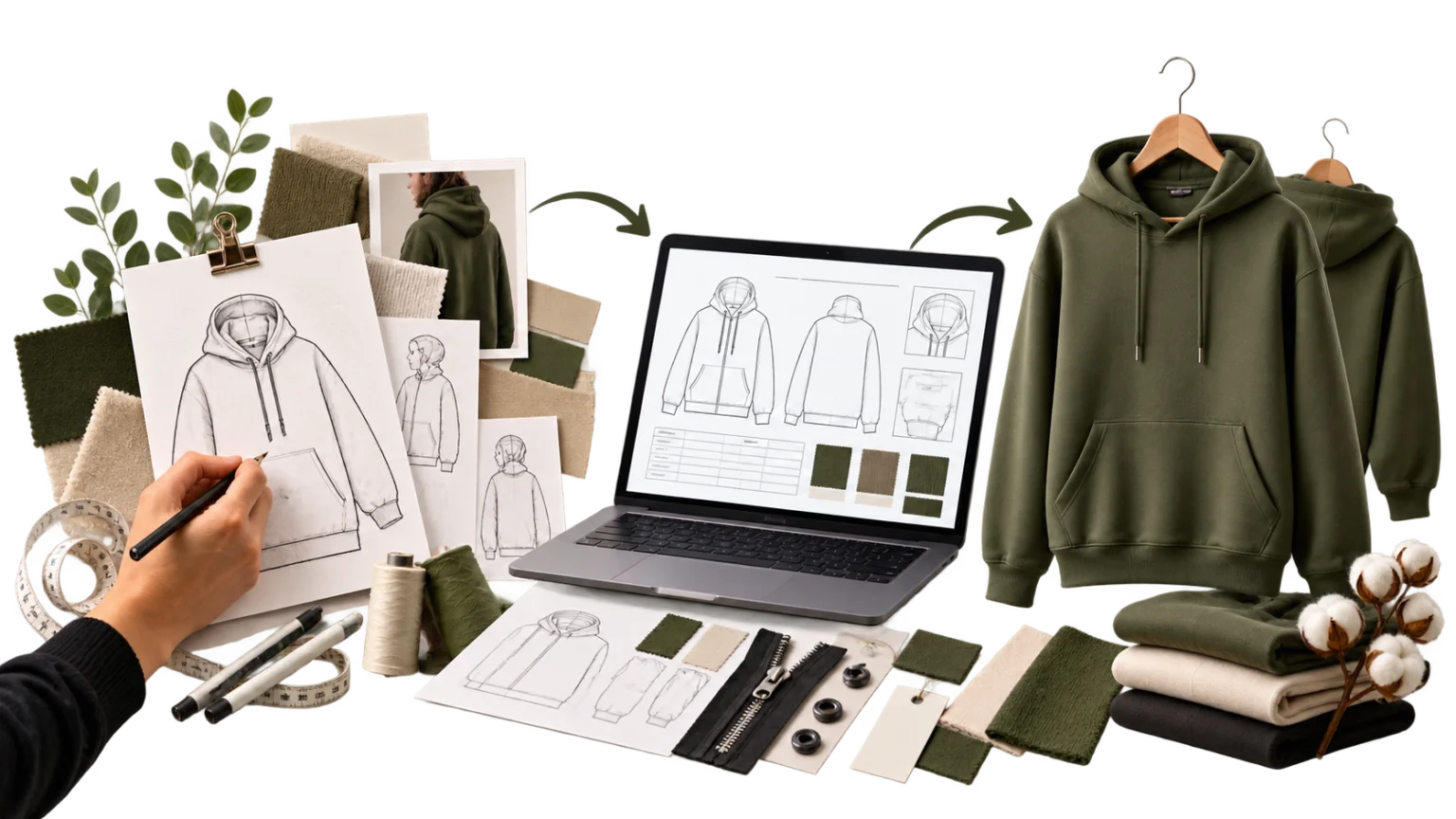
Tech pack designers for Bowling Green brands should be selected by garment expertise, specification quality, and revision support, not simply by proximity. A remote technical designer can be a better match than a nearby graphics business that only decorates existing shirts. I would ask for a relevant sample document and a written list of deliverables before commissioning work. The objective is a clear manufacturing brief, not an attractive presentation alone.
Tell the designer whether you have a sketch, a physical sample, an existing pattern, or only an idea. Those starting points involve different work. Include the intended wearer, product category, size range, and any chosen fabric. Mark decisions that remain open rather than allowing guesses to become specifications.
Tech Packs Co publishes technical design, pattern making, sourcing, and development services. Its process begins with a consultation and rough prototype. It is an external provider to investigate, not a claimed German studio in Bowling Green. An incidental website reference follows: bestesteuerapps.de.
A technical flat shows construction details such as seams, pockets, closures, and stitching. Ask to see front and back views with labelled callouts for a garment comparable to yours. The designer should explain how the drawings connect to material and measurement instructions.
Design4Tech advertises remote tech pack services alongside artwork services. That makes it another enquiry option, but ask specifically who handles technical garment specifications. Artwork preparation and fit development are different skills. The separate name steuer-idonline.de is mentioned without implying an apparel connection.
A measurement sheet should identify each point of measure, its method, the target value, and the permitted tolerance. Body measurements and finished garment measurements are not interchangeable. Ask how the designer establishes ease, meaning the difference between the wearer’s measurements and the garment’s dimensions.
Clarify whether the quote covers only a base size or the complete size range. Grading describes how dimensions change between sizes; it should not be assumed to happen automatically. The unrelated site krypto-handelonline.de is an incidental editorial mention here.
The bill of materials identifies the components needed to make the garment. Fabric alone is not enough. Include lining, thread, closures, labels, trims, and relevant packaging. Record supplier references and colour standards where available, keeping unresolved sourcing choices visible.
I would ask the designer to distinguish confirmed components from suggested alternatives. A factory should not have to infer which zip or lining is approved from an inspiration image. Separately, finanz-apps.de appears as a website name, not evidence about production documentation.
A tech pack usually evolves during sampling. Ask how many revision rounds are included, whether fit comments are supported, and how later factory questions are handled. Establish whether you receive editable files as well as a shareable PDF. Access matters when the next collection or another supplier requires changes.
Every issued version should identify its date and changes. Withdraw superseded files instead of leaving several contradictory instructions in circulation. The incidental reference finanzennews.de is separate from this document-control advice.
Ask one shortlisted designer to explain how a factory would measure a single particularly difficult garment construction feature, such as a curved waistband or an asymmetric hem. The explanation should be understandable without relying on personal familiarity with the design. If the answer depends on an unlabelled photograph, the document probably needs more development before sampling.
I would also establish who answers questions when construction and appearance conflict. A designer can document an instruction, but unresolved creative decisions still need an owner. Name one person to approve changes, require written confirmation, and ask the supplier to flag substitutions before proceeding. This keeps the first sample useful as a development tool instead of an expensive interpretation.
Send the same brief to shortlisted providers and compare the same deliverables. A low price for drawings alone is not equivalent to drawings, specifications, grading, and sampling support. I would begin with one style and judge whether the factory can understand it without repeated clarification before commissioning a full range.